Greater Wellington has filed charges against Tiaki Wai and Wellington City Council following its investigation into alleged unlawful wastewater discharges from the Moa Point Wastewater Treatment Plant. The charges relate to…

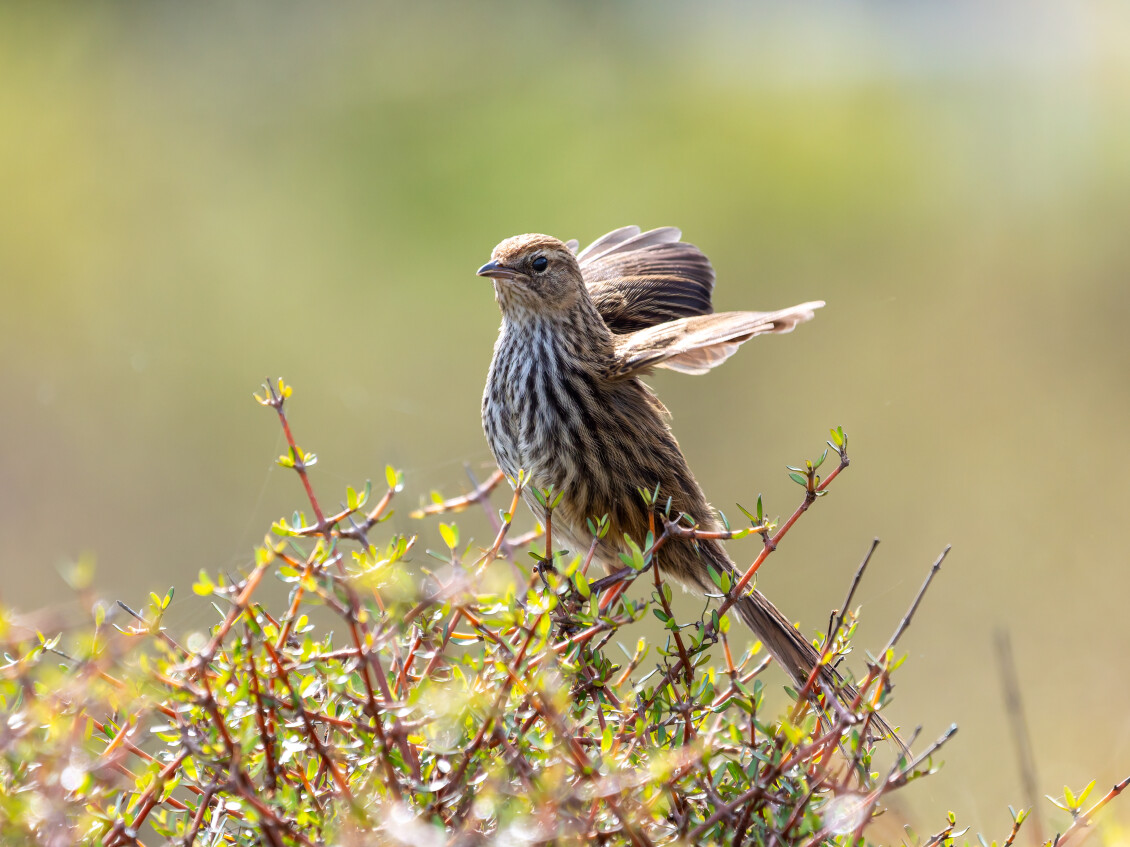
A native bird classified as regionally Threatened: Vulnerable has been discovered at Parangarehu Lakes after around 70 years without recorded sightings, highlighting the importance of ongoing efforts to protect and restore the area’s wetlands.
Mātātā, or Fernbirds, have been spotted at Lake Kōhangaterā in East Harbour Regional Park in an exciting discovery for the Wellington region.
These secretive native birds depend on healthy wetlands for survival and face threats including introduced predators, habitat loss and human disturbance. The sightings are also the furthest from other known fernbird populations in the region, suggesting the birds are spreading into new areas.
Mātātā are notoriously difficult to spot because they spend most of their time inside the canopy of shrubs. They live among dense wetland vegetation, where they forage for insects and other small invertebrates. Their reliance on high-quality, diverse wetland habitats makes their presence an encouraging development for the area’s biodiversity.
Bird surveyor Shane Cotter said the discovery was significant both for the species and for the park.
“This is exciting news as fernbirds have been absent from the lower North Island (Wellington and Wairarapa) for around 70 years except for a few small populations on the Wellington’s west coast. They are described as poor flyers so to locate them at the Parangarehu Lakes was a surprise. To find multiple birds is also encouraging and a very positive sign for East Harbour, particularly following the recent purchase of Gollans Valley”
The discovery follows years of work by Rōpū Tiaki o te Parangarehu Lakes Area, the co-governance group bringing together Taranaki Whānui and Greater Wellington, alongside dedicated iwi members and volunteers who help protect and restore the lakes and surrounding habitat. This work includes predator control and efforts to prevent further degradation of the area.
Wetlands are among New Zealand’s most threatened ecosystems, with more than 90 per cent of the country’s original wetland area lost since human settlement in the 1840s’. There are less than three percent of wetlands remaining in the Wellington Region. Protecting and restoring those that remain is vital for native plants and wildlife.
Lee Hunter, representing Taranaki Whānui, said the discovery was an encouraging sign of the value of the partnership and the ongoing conservation work at the lakes. One of our Rōpū Tiaki outcomes is Manu Kōrihi, meaning a flourishing forested landscape and healthy wetland lake eco-system that sustains multitudes of birds and indigenous species.
“We recently discussed the re-introduction and return of Mātātā, so a baseline survey was conducted, and we found that they had returned on their own. We also know that the Mātātā is a tohu to us that the quality of the environment is of a high-level native species being seen again at the lakes is a great testament to the commitment of everyone working to protect and restore this special taonga, more importantly holding the mana and mōuri of our lakes as the highest priority and maintain the priceless taonga we have for our mokopuna into the future.”
Greater Wellington Director of Delivery Jack Mace said the discovery was a welcome reminder of the importance of sustained conservation efforts.
“It’s fantastic to see mātātā at Parangarehu Lakes. These birds are not common at all so to find them here is a real sign that the efforts of council, iwi, and volunteers to protect biodiversity, restore wetlands, and knock back introduced predators are paying dividends. Finding these birds is a good sign for local wildlife. It shows why we need to keep protecting and restoring East Harbour Regional Park and all regional parks across the Wellington region.
Surveys will continue to build understanding of the fernbirds’ presence at Parangarehu Lakes.
Greater Wellington has filed charges against Tiaki Wai and Wellington City Council following its investigation into alleged unlawful wastewater discharges from the Moa Point Wastewater Treatment Plant. The charges relate to…
Following an independent investigation, Greater Wellington has filed charges in the District Court in Wellington relating to multiple non-compliance events at Moa Point Wastewater Treatment Plant (WWTP). The series of…
Greater Wellington is throwing its support behind the banded dotterel (pohowera) in this year's Bird of the Year competition, championing one of the Wellington Region's most charismatic, hardworking, and endangered…