Greater Wellington has filed charges against Tiaki Wai and Wellington City Council following its investigation into alleged unlawful wastewater discharges from the Moa Point Wastewater Treatment Plant. The charges relate to…

Greater Wellington’s flood resilience work involves rivers, stopbanks and planting plans. In Wairarapa, it also creates opportunities to strengthen connections between people, whenua and water, and to support long term wellbeing across the region.
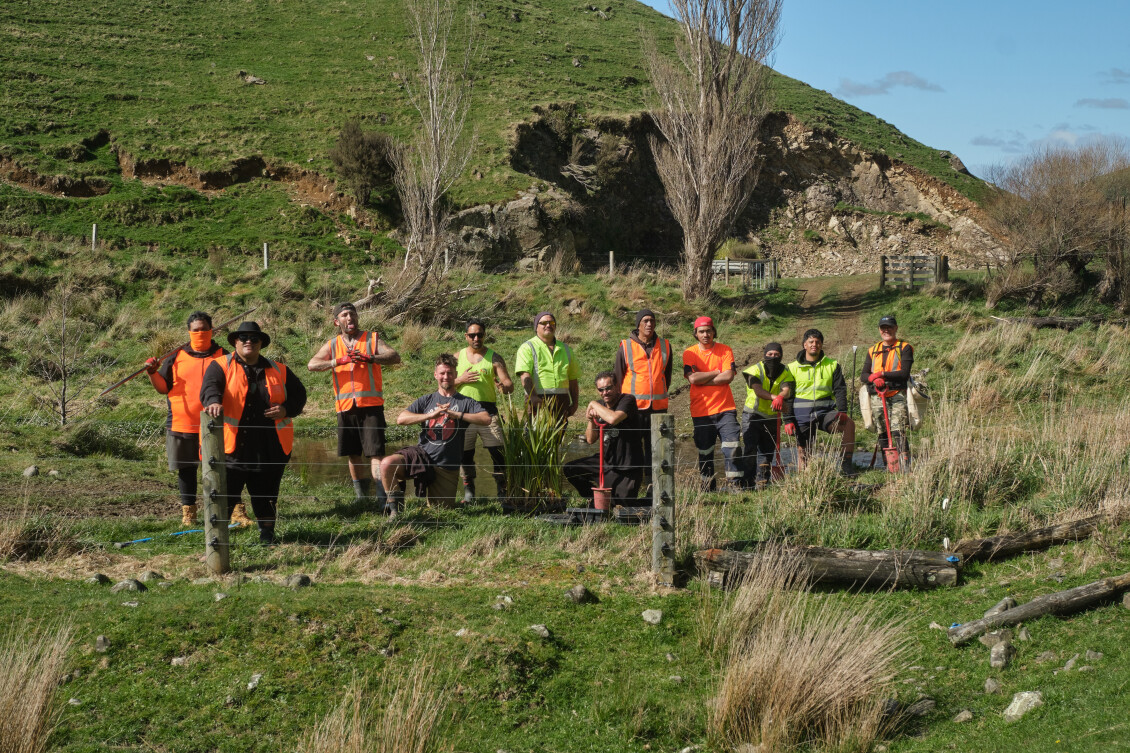
This approach is a key aim of our partnership with the Ahu Collective, a kaupapa driven social enterprise working alongside whānau who have experienced disconnection, trauma and longstanding barriers to employment. Through this partnership, our flood resilience work is also helping restore community connection, dignity and purpose through meaningful, land based mahi.
Founded in 2022, the Ahu Collective has grown from a desire to give back to the community and respond differently to entrenched social issues. Its approach recognises that lasting change requires restoring connection, dignity and purpose.
“Returning our people to land based mahi has been transformative, addressing issues such as violence, substance harm and crime, while fostering pride, responsibility and belonging,” says Ahu Director Anaru Te Rangiwhakaewa
Over time, Ahu’s model has shown clear social benefits and stronger pathways forward. One of its biggest goals has been ensuring those gains don’t stop at rehabilitation.
“For real, long term change, people need meaningful employment,” says Anaru. “Without that, too many positive initiatives fade once the programme ends.”
Through Greater Wellington’s Broader Outcomes kaupapa, co funded from the Regional Infrastructure Fund that next step has become possible. Anaru established Ahu Collective Environmental, a pathway designed to support whānau transitioning out of rehabilitation and into training, employment and ongoing development.
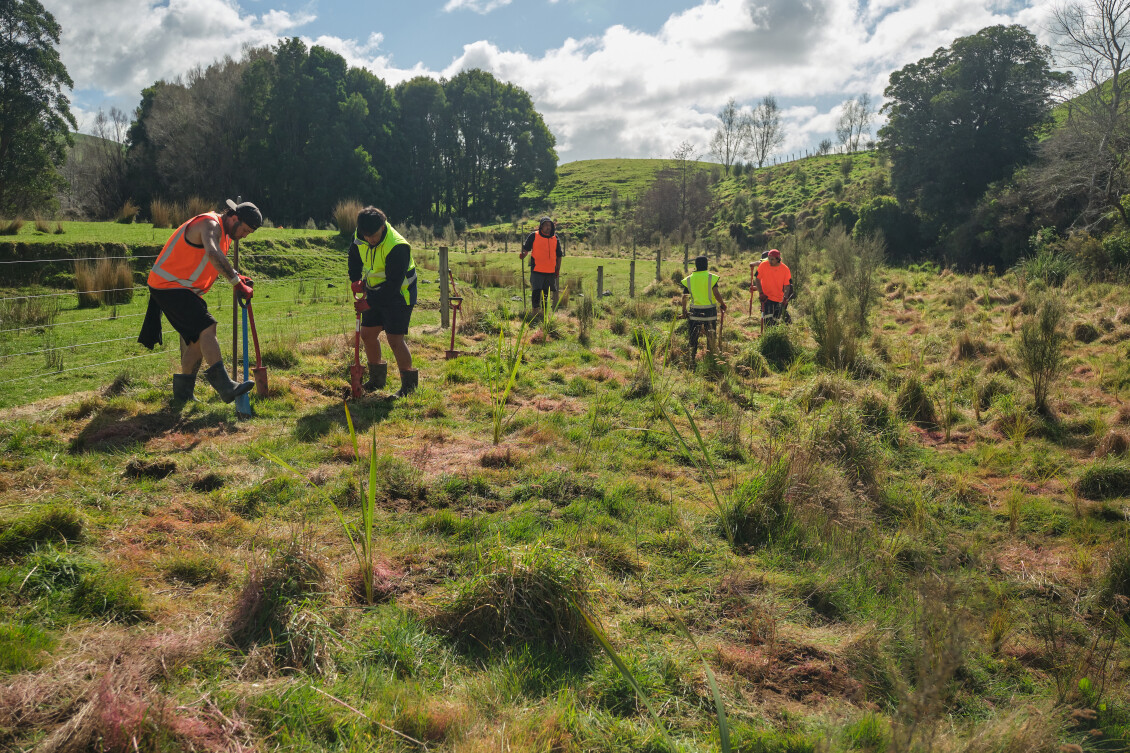
In 2024 the initiative took shape with Ahu’s first major role in supporting Greater Wellington’s flood resilience work in the Wairarapa. Ten participants gained GrowSafe certification, first aid and horticultural skills, building real capability and confidence while contributing to large scale native planting across flood protection sites.
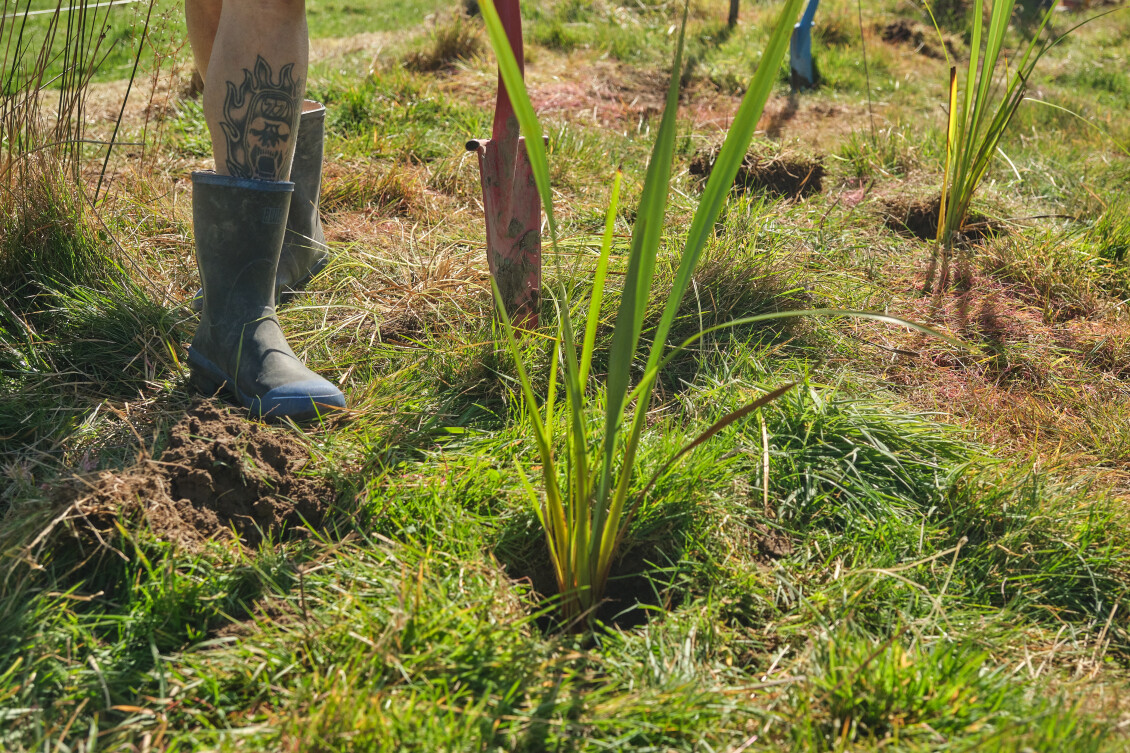
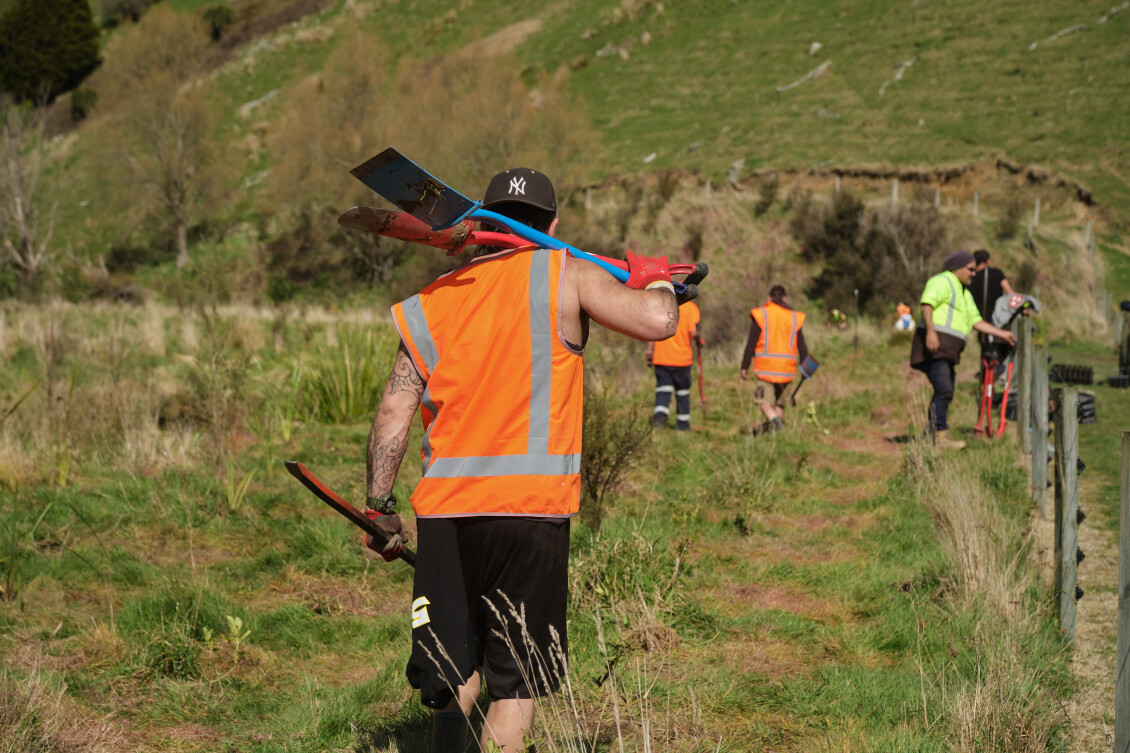
Between July and September that year, the team planted around 22,000 native plants across the Upper Waipawa and Ruamāhanga catchments. For many of those involved, the impact ran deeper than the mahi itself.
“A lot of our people descend from these waterways,” says Anaru. “For some, it was the first time in many years they’d been back on that land, learning the stories of the rivers and contributing to their protection.”
Now preparing for a second planting season, with plans to plant up to 44,000 natives across three sites, Ahu Collective Environmental continues to grow capability that supports environmental outcomes and long term community wellbeing.
“When the right ecosystem of support is in place,” says Anaru, “you can care for the land and grow people at the same time.”
Partnerships like this show what flood resilience can achieve: not just protecting communities from flooding, but helping build stronger, more connected futures alongside the rivers that sustain them.
Greater Wellington has filed charges against Tiaki Wai and Wellington City Council following its investigation into alleged unlawful wastewater discharges from the Moa Point Wastewater Treatment Plant. The charges relate to…
Following an independent investigation, Greater Wellington has filed charges in the District Court in Wellington relating to multiple non-compliance events at Moa Point Wastewater Treatment Plant (WWTP). The series of…
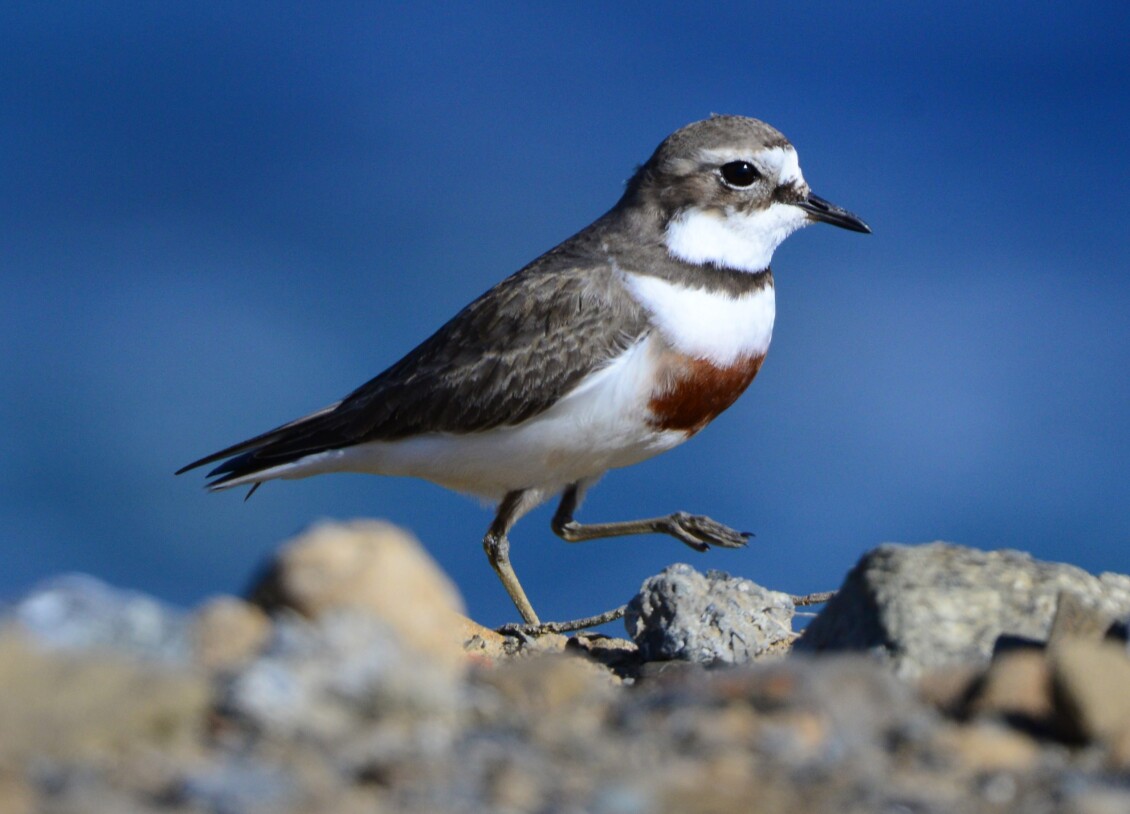
Greater Wellington is throwing its support behind the banded dotterel (pohowera) in this year's Bird of the Year competition, championing one of the Wellington Region's most charismatic, hardworking, and endangered…